
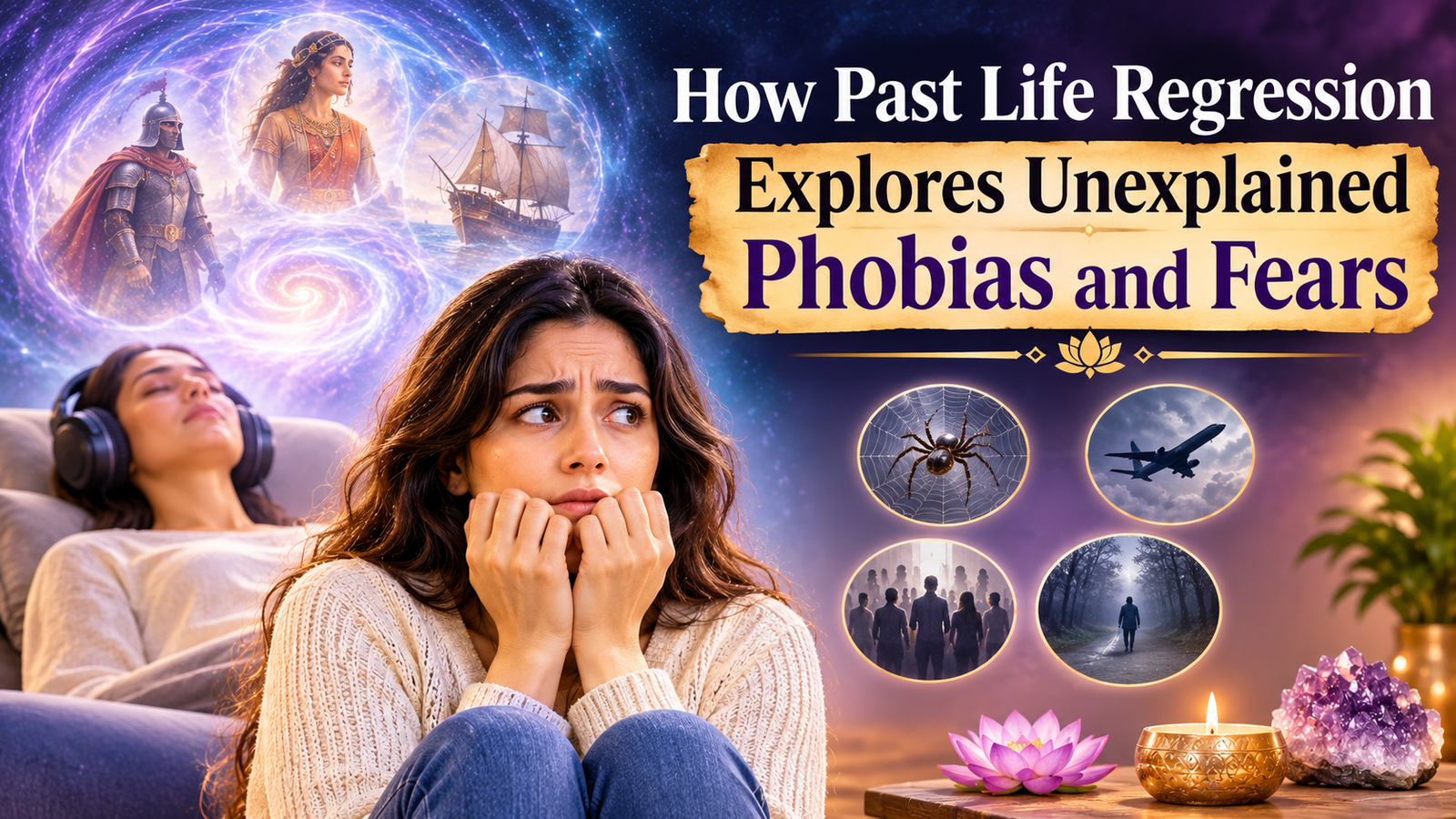
Fear is a natural part of human life. It helps us recognise danger and respond to situations that may threaten our safety. However, some fears seem difficult to explain. A person may feel uncomfortable around water, experience anxiety when travelling in a lift, fear certain animals or become nervous in situations that do not appear dangerous. Sometimes, these reactions occur even when there is no clear memory of a frightening experience.
Such experiences can raise questions about why certain fears develop and what may be contributing to them. While many phobias are connected to personal experiences, learned behaviour, genetics or other psychological factors, some people also explore spiritual approaches to understanding their emotions.
One such approach is Past Life Regression Therapy. It is a guided relaxation practice that encourages individuals to explore images, feelings and impressions that may arise during a focused state. Some spiritual traditions interpret these experiences through the idea of previous lifetimes.
In this article, we will explore how past life regression approaches unexplained fears and phobias, why people consider this practice and what to understand before exploring it.
Understanding Unexplained Fears and Phobias
Fear is the body’s natural response to a perceived threat. It prepares us to react when we feel unsafe. However, when fear becomes intense, persistent and difficult to control, it may affect everyday activities and personal freedom.
A phobia is generally understood as an excessive or persistent fear of a particular object, situation or activity. For example, someone may experience a strong fear of flying even when they understand that air travel is statistically safe. Another person may avoid crowded places, heights or enclosed spaces because of intense anxiety.
Unexplained Fears and Phobias can feel confusing, especially when a person cannot identify a clear reason behind them. However, not remembering a specific triggering event does not mean that a fear has no psychological or biological explanation.
Some common examples include:
- Fear of water or deep swimming pools.
- Fear of heights or falling.
- Fear of darkness or enclosed spaces.
- Anxiety around particular animals.
- Fear of travelling by air or road.
- Discomfort in crowded places.
- Strong emotional reactions to certain sounds or situations.
These fears can have different causes, and understanding them often requires looking at a person’s experiences, emotional responses and environment.
What Is Past Life Regression Therapy?
Past Life Regression Therapy is a guided practice that commonly uses relaxation, focused attention and hypnosis-based techniques. During a session, a practitioner encourages an individual to describe thoughts, images, emotions or impressions that arise while they are in a relaxed state.
From a spiritual perspective, some people interpret these experiences as memories connected to previous lifetimes. Others may understand them as symbolic expressions of the subconscious mind, imagination or personal emotions.
People interested in this practice may explore it because they want to reflect on recurring emotional patterns, relationship experiences or fears that they find difficult to understand.
It is important to maintain a balanced perspective. There is no reliable scientific evidence confirming that past life regression retrieves factual memories of previous lifetimes. The experiences that arise during a session should not automatically be treated as proof of historical events or the actual origin of a phobia.
Past life regression is best understood as a spiritual or reflective practice, not as an established medical treatment for anxiety disorders or phobias.
How Past Life Regression Explores Unexplained Fears
People who explore past life regression often approach it with questions about emotions or reactions they find difficult to explain. A guided session may provide an opportunity to observe these feelings and reflect on the images or impressions that arise.
The process generally involves relaxation followed by gentle guidance from a practitioner. The individual may be encouraged to describe what they notice without forcing a particular memory or experience.
For example, someone with a strong fear of water may explore the emotions that arise when thinking about water. During a regression session, they might report images, sensations or symbolic scenes. From a spiritual viewpoint, they may connect these impressions with a past-life story. Another person may interpret them as expressions of imagination or emotional associations.
The important point is that the session can encourage personal reflection, but it cannot establish the factual cause of a fear.
A responsible practitioner should avoid suggesting that a particular image proves why someone has a phobia. Instead, the focus should remain on the person’s comfort, experience and individual interpretation.
Past Life Regression for Phobias: Why Are People Interested?
Past Life Regression for Phobias is a topic of interest among people who want to explore spiritual explanations for their emotional experiences.
Some individuals believe that unexplained fears may be connected to experiences associated with previous lifetimes. For example, a person who fears water might wonder whether the fear has a deeper spiritual meaning. Someone uncomfortable with enclosed spaces may explore whether certain images or emotions arise during guided relaxation.
These interpretations are part of spiritual belief systems rather than scientifically established explanations.
People may be interested in regression for several reasons:
Curiosity About Emotional Patterns: Some individuals want to understand why particular situations create strong emotional reactions.
Spiritual Exploration: People who believe in reincarnation may use regression as a way to explore their understanding of the soul’s journey.
Self-Reflection: A guided session may encourage individuals to think about their emotions, personal experiences and responses.
Personal Meaning: Some participants find that reflecting on the images or stories they experience gives them a new perspective on their feelings.
However, a phobia should not be ignored or left untreated because someone is exploring a spiritual practice. Evidence-based psychological care remains important when fear affects daily life.
Understanding the Causes of Irrational Fears
Before exploring spiritual explanations, it is useful to understand the recognised psychological and biological factors that can contribute to fear.
The Causes of Irrational Fears are not always straightforward. A person may develop a phobia through one experience or a combination of several influences.
1. Difficult or Frightening Experiences
A frightening event can sometimes create a lasting association between a particular situation and danger. For example, a person who experiences a frightening incident in a lift may later feel anxious in enclosed spaces.
2. Learned Behaviour
People can develop fears by observing the reactions of family members or others around them. A child who regularly sees someone reacting fearfully to dogs may gradually develop a similar response.
3. Biological and Genetic Factors
Some individuals may be more sensitive to anxiety because of inherited traits, temperament or differences in how their nervous system responds to perceived threats.
4. Stress and Anxiety
Long periods of stress can influence how a person responds to everyday situations. When someone is already experiencing anxiety, certain places, sounds or activities may begin to feel more threatening.
5. Personal Associations
Sometimes, a particular smell, sound, place or situation can become associated with an uncomfortable emotion. The person may not immediately remember why that association developed.
Understanding these factors can help individuals make informed decisions about the support they need.
Can Past Life Regression Help With Past Life Trauma Healing?
The idea of Past Life Trauma Healing is often discussed in spiritual communities. People who believe in reincarnation may explore regression to reflect on experiences they interpret as connected to previous lifetimes.
Some participants report emotional reactions or symbolic experiences during a session. They may find personal meaning in these experiences and use them as an opportunity to reflect on their present feelings.
However, it is important not to confuse personal interpretation with verified trauma recovery. Past life regression has not been established as a treatment for trauma, phobias or mental health conditions.
For individuals experiencing trauma-related symptoms, a qualified mental health professional can help identify appropriate treatment options. Evidence-based approaches, including certain forms of psychotherapy, may be recommended depending on the individual’s needs.
Spiritual exploration should never replace professional care or encourage someone to revisit distressing experiences without suitable support.
What Happens During a Past Life Regression Session?
Although the exact process varies between practitioners, a typical session may involve a few general stages.
Initial Discussion
The practitioner discusses your reasons for attending, expectations and any concerns. This is an opportunity to understand the process and ask questions.
Relaxation and Focus
You may be guided through breathing exercises or relaxation instructions. The purpose is to help you become comfortable and focus your attention.
Guided Exploration
The practitioner may ask gentle questions while you describe any images, feelings or impressions that arise. There is no requirement to experience a particular scene or remember anything specific.
Reflection
After the session, you may discuss your experience and consider what personal meaning you associate with it. Any interpretation should remain open to discussion rather than being treated as a confirmed explanation of your fears.
You should always be able to pause or stop a session if you feel uncomfortable.
How to Choose the Right Past Life Regression Practitioner
If you are considering a regression session, selecting a responsible practitioner is important. A suitable practitioner should explain the process clearly and respect your personal boundaries.
Before booking, consider the following points:
- Check the practitioner’s relevant training and experience.
- Ask how the session is conducted.
- Understand the difference between spiritual interpretation and established psychological treatment.
- Look for clear information about session duration and fees.
- Avoid anyone who promises guaranteed results or claims to cure phobias.
- Choose someone who respects your decision to stop or decline any part of the process.
A professional approach should prioritise your comfort and well-being rather than making dramatic claims about the experience.
When Should You Seek Professional Help for Phobias?
If a fear is affecting your relationships, work, travel or everyday activities, consider speaking with a qualified mental health professional.
Phobias can often be addressed through evidence-based treatments. Cognitive behavioural therapy (CBT), including exposure-based approaches, is commonly used to help people manage specific fears. A qualified professional can assess your situation and recommend suitable support.
You do not need to wait until a fear becomes overwhelming before seeking help. Getting guidance early can make it easier to understand your reactions and explore appropriate ways to manage them.
Spiritual practices may be meaningful to some people, but they should be considered separately from professional mental health treatment.
Frequently Asked Questions
1. Can past life regression explain unexplained fears?
Some people use past life regression to explore images and emotions they associate with unexplained fears. However, these experiences cannot scientifically establish the actual cause of a phobia or prove memories of previous lifetimes.
2. What is Past Life Regression Therapy?
It is a guided relaxation and exploration practice that may involve hypnosis-based techniques. People often approach it from a spiritual or self-reflective perspective.
3. Is past life regression a treatment for phobias?
No. Past life regression is not an established treatment for phobias. People experiencing persistent or severe fears should consider evidence-based support from a qualified mental health professional.
4. Why do some people have fears without remembering a frightening experience?
Fears can develop through learned behaviour, biological factors, stress, personal associations or experiences that a person may not clearly remember.
5. Can a regression session bring up strong emotions?
Some individuals may experience emotional responses during guided relaxation. A responsible practitioner should respect personal boundaries and allow participants to pause or stop whenever necessary.
Conclusion
Unexplained fears and phobias can affect many areas of life, sometimes leaving individuals with questions about why they react strongly to particular situations. Understanding these feelings can involve exploring personal experiences, emotional patterns and recognised psychological factors.
Past life regression offers a spiritual or reflective approach that some people use to explore images, emotions and impressions that arise during guided relaxation. While these experiences may hold personal meaning, they should not be treated as verified memories or proven explanations for phobias.
Whether you are interested in Past Life Regression Therapy out of spiritual curiosity or a desire for self-reflection, approach the experience with realistic expectations and choose responsible guidance. Most importantly, if fear is interfering with your daily life, seek support from a qualified mental health professional.
Understanding your fears is a gradual process. With the right information, appropriate support and patience, you can take thoughtful steps towards improving your emotional well-being.