Tarot cards have fascinated people for generations. Their beautiful symbols, mysterious images, and deeper meanings often make people curious about what the cards can reveal about life, relationships, career, emotions, and personal decisions.
For some people, tarot is a spiritual practice. For others, it is a way to reflect on their thoughts and feelings when they are facing confusion or an important decision. Whatever your reason for exploring tarot, understanding the meaning behind each card can make the experience much more meaningful.
A professional tarot card reading consultation is not simply about asking what will happen in the future. It can also be an opportunity to understand your current situation, recognize patterns, and look at your choices from a different perspective.
What Are Tarot Cards?
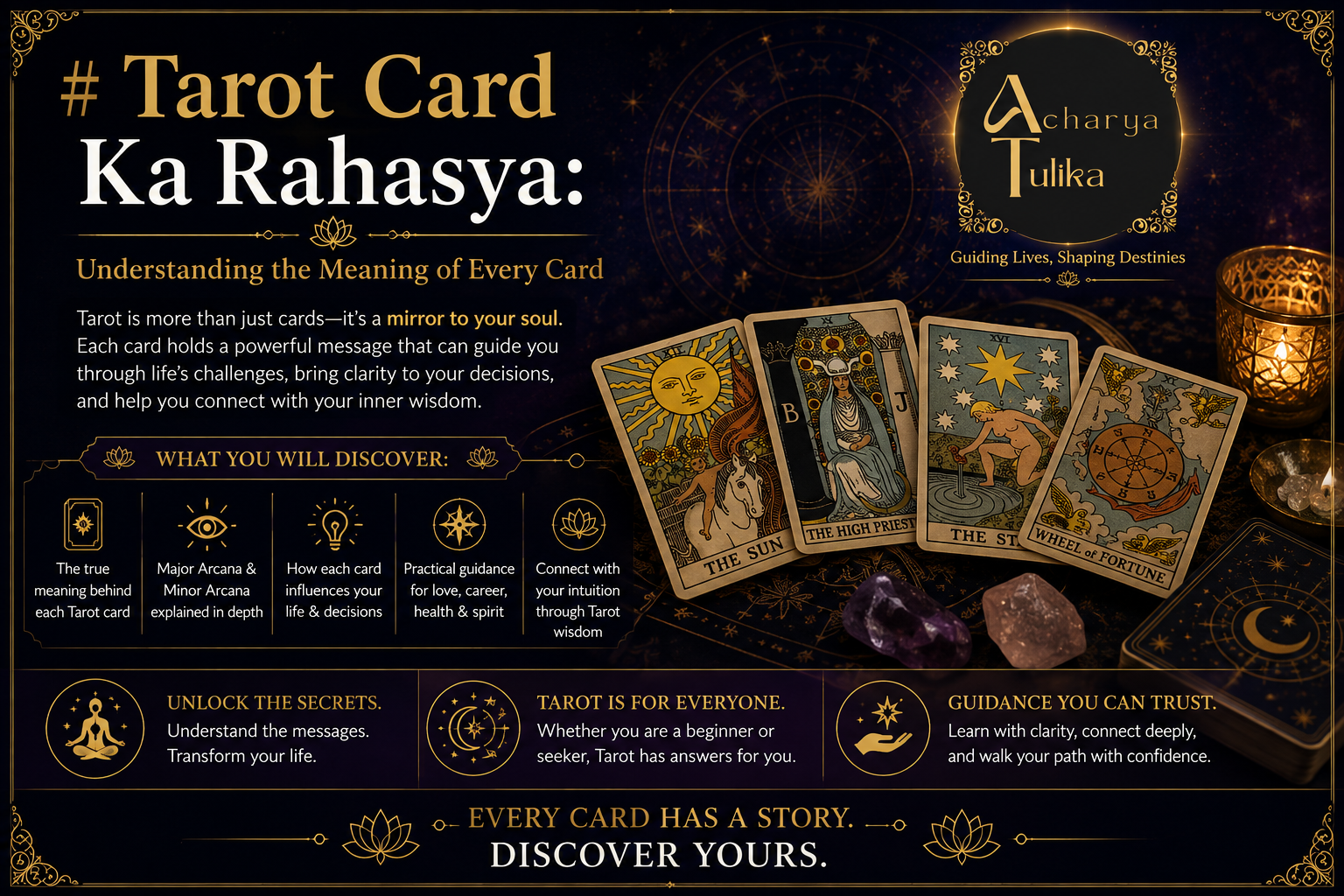
A traditional tarot deck contains 78 cards divided into two major sections: the Major Arcana and the Minor Arcana.
The Major Arcana contains 22 cards, beginning with The Fool and ending with The World. These cards are generally associated with major experiences, important lessons, transitions, and turning points in life.
The remaining 56 cards form the Minor Arcana. They are divided into four suits: Wands, Cups, Swords, and Pentacles. These cards are generally connected with everyday situations, emotions, relationships, work, finances, communication, and personal experiences.
Understanding these two sections is the first step toward understanding tarot.
The Meaning Behind the Major Arcana
Each Major Arcana card carries its own symbolism and message. Together, these cards can be seen as representing different stages of the human journey.
The Fool
The Fool represents new beginnings, freedom, curiosity, and taking a leap into something unfamiliar. It can appear when you are entering a new chapter and need to trust yourself while remaining aware of the risks.
The Magician
The Magician is associated with confidence, creativity, skill, communication, and taking action. It reminds you that you may already have many of the tools needed to achieve your goals.
The High Priestess
The High Priestess represents intuition, inner wisdom, mystery, and hidden information. When this card appears, it may be a reminder to listen to your instincts instead of looking for immediate answers from outside sources.
The Empress
The Empress represents creativity, abundance, nurturing, beauty, and growth. It is often connected with developing ideas, relationships, or personal projects.
The Emperor
The Emperor symbolizes structure, discipline, authority, stability, and leadership. It can suggest the importance of creating order and taking responsibility for your decisions.
The Lovers
The Lovers are strongly associated with relationships, emotional connections, harmony, and important choices. The card can also represent making decisions that are genuinely aligned with your values.
The Chariot
The chariot represents determination, ambition, movement, and control. It suggests that progress requires focus and the willingness to stay committed to your direction.
Strength
Strength represents courage, patience, emotional control, compassion, and inner power. Its message is often about handling difficult situations calmly rather than reacting impulsively.
The Hermit
The Hermit represents introspection, solitude, wisdom, and self-reflection. Sometimes stepping away from outside noise can help you understand what you genuinely want.
Wheel of Fortune
This card represents cycles, change, unexpected developments, and shifts in circumstances. It reminds us that life is constantly moving and that difficult periods do not necessarily last forever.
Justice
Justice is associated with truth, fairness, balance, accountability, and consequences. It encourages honest thinking and taking responsibility for one’s choices.
The Hanged Man
The Hanged Man represents patience, surrender, and seeing things from a different perspective. Sometimes a situation becomes clearer when we stop trying to force an immediate solution.
Death
The Death card often looks frightening to beginners, but it generally represents transformation, endings, and new beginnings rather than literal death. It can indicate that an old chapter needs to end before something new can develop.
Temperance
Temperance represents balance, patience, moderation, and harmony. It encourages finding a middle path and avoiding unnecessary extremes.
The Devil
The Devil is associated with attachment, temptation, unhealthy patterns, and feeling trapped. It can encourage you to examine habits or situations that may be limiting your freedom.
The Tower
The Tower represents sudden change, disruption, and the collapse of structures that are no longer stable. Although challenging, it can create an opportunity to rebuild on a stronger foundation.
The Star
The Star symbolizes hope, healing, inspiration, optimism, and renewal. It often carries a message of looking forward after a difficult period.
The Moon
The Moon represents uncertainty, intuition, dreams, fears, and hidden information. It encourages you to avoid making decisions based only on assumptions.
The Sun
The Sun is one of the most positive cards in tarot. It represents happiness, confidence, clarity, success, optimism, and positive energy.
Judgement
Judgement represents awakening, realization, reflection, and important decisions. It can indicate learning from the past and moving forward with greater awareness.
The World
The World represents completion, achievement, fulfillment, and the end of an important cycle. It can suggest that one chapter has reached its natural conclusion.
Understanding the Minor Arcana
The Minor Arcana focuses more on everyday experiences. Its four suits each have a different theme.
Wands are connected with passion, creativity, ambition, energy, and action.
Cups are associated with emotions, relationships, love, intuition, and personal connections.
Swords represent thoughts, communication, decisions, conflict, and mental challenges.
Pentacles are linked with money, career, work, financial security, and practical matters.
When several cards from the same suit appear in a reading, they can provide additional context about the area of life that may currently require attention.
What Does a Reversed Tarot Card Mean?
Sometimes a card appears upside down during a reading. This is known as a reversed card.
A reversed card does not automatically mean something negative. Depending on the reader and the context, it can represent blocked energy, delays, internal struggles, or a different expression of the card’s traditional meaning.
For example, Strength in an upright position may represent confidence and courage, while reversed Strength may encourage you to look at self-doubt or emotional insecurity.
The surrounding cards and the question being asked are always important when interpreting a reversal.
What Happens During a Tarot Card Reading Consultation?
People usually approach a tarot card reading consultation when they are looking for clarity about a particular area of life. This could involve relationships, career, finances, personal decisions, or simply a desire to understand their current situation better.
A reading generally begins with a discussion about the question or situation. The cards are then selected according to the chosen spread, and their symbolism is interpreted in relation to the question.
The experience can be much more useful when the person approaches the session with an open mind rather than expecting one fixed prediction.
Is Tarot Only About Predicting the Future?
Not necessarily.
One of the biggest misconceptions about tarot is that the cards provide an unchangeable picture of what is going to happen.
In reality, many readers use tarot as a tool for reflection and guidance. The cards can highlight possibilities, patterns, emotions, and areas that may need attention.
Your decisions and actions still matter.
This is why a meaningful tarot session should encourage you to think about your choices rather than make you completely dependent on a prediction.
How Tarot Can Support Self-Reflection
Sometimes we already have an idea about what we want, but fear or confusion prevents us from acknowledging it.
Tarot can encourage questions such as:
What am I really feeling?
What am I avoiding?
Why does this situation keep repeating?
What choices do I have?
What can I learn from my current circumstances?
These questions can turn a simple card reading into a deeper self-reflection exercise.
Choosing the Right Tarot Reader
If you are considering a tarot card reading consultation, it is important to choose someone who communicates clearly and respects your individual circumstances.
A good reader should not create unnecessary fear or make unrealistic promises. Instead, the reading should help you understand the symbolism of the cards and relate it to your current situation.
It is also important to remember that tarot should be used as guidance rather than as a replacement for professional medical, legal, financial, or psychological advice.
Final Thoughts
The mystery of tarot lies in its ability to tell stories through symbols. Each card represents different experiences that we encounter throughout life—love, ambition, uncertainty, change, challenges, hope, growth, and transformation.
Learning tarot is not simply about memorizing the meaning of 78 cards. It is about understanding the story behind the symbols and seeing how those themes connect with real-life experiences.
Whether you are completely new to tarot or have been exploring it for years, a thoughtful tarot card reading consultation can provide a fresh perspective when you are facing questions or uncertainty.
Ultimately, tarot does not have to tell you exactly what your future will look like. Sometimes, its greatest value is helping you understand where you are today, what you are feeling, and what possibilities may be available to you tomorrow.